Roast Beef Recipe Juicy Classic Oven Roast
Introduction
roast beef recipe is the ultimate comfort food for meat lovers, offering a straightforward path to a juicy, tender, and flavorful centerpiece that graces any table with elegance. This classic approach uses minimal ingredients and a reliable oven technique to ensure consistent results, making it accessible for beginners and rewarding for seasoned cooks. The secret lies in proper seasoning, accurate temperature control, and patience during the resting phase, which locks in moisture and enhances flavor. Whether you’re planning a Sunday family dinner, a holiday feast, or a simple weeknight meal, this roast beef recipe delivers a stunning dish with minimal effort. It embodies an easy roast beef, oven roast beef, classic roast beef dinner, homemade roast beef experience that combines tradition with reliability, ensuring your roast is always the star of the show.
Ingredients List
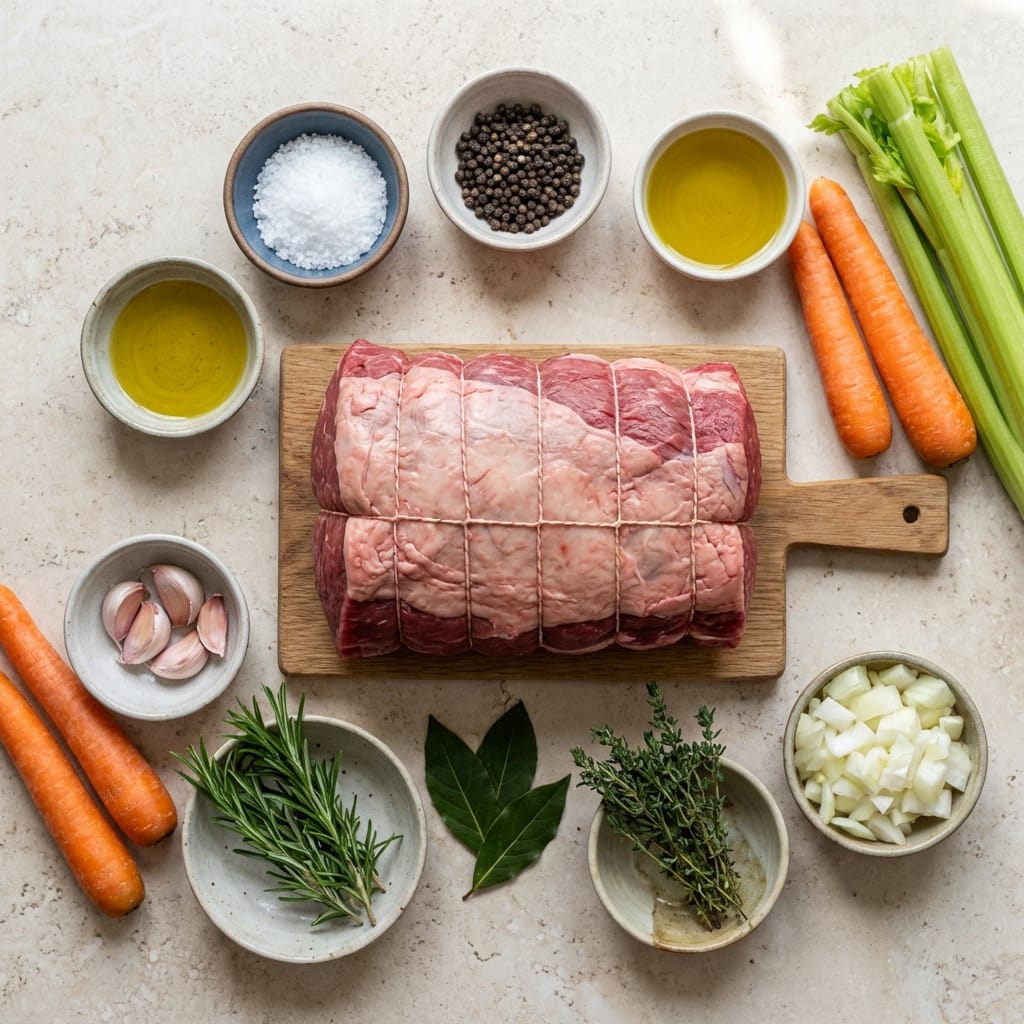
For this roast beef recipe, you’ll need just a few high-quality ingredients to highlight the natural flavor of the meat. Choosing a well-marbled cut ensures juiciness and richness.
- 1 beef roast (3-4 pounds), such as sirloin, ribeye, or tenderloin
- 2 tablespoons olive oil
- 1 tablespoon coarse kosher salt
- 1 teaspoon freshly ground black pepper
- 3-4 cloves garlic, minced
- 1 tablespoon fresh rosemary or thyme, chopped (optional)
Timing
Timing is crucial for a perfect roast beef recipe. Preheat your oven to 400°F (200°C) for initial searing. Cook for approximately 20 minutes per pound at this temperature, then reduce to 350°F (175°C) until the internal temperature reaches your desired doneness. Use a meat thermometer for accuracy: 120-125°F (49-52°C) for rare, 130-135°F (54-57°C) for medium-rare, 140-145°F (60-63°C) for medium, and 150-155°F (66-68°C) for medium-well. Always rest the roast for 15-20 minutes tented with foil; this allows juices to redistribute, making slicing easier and meat more tender. Total cooking time includes resting, so plan accordingly.
Step-by-Step Instructions for roast beef recipe
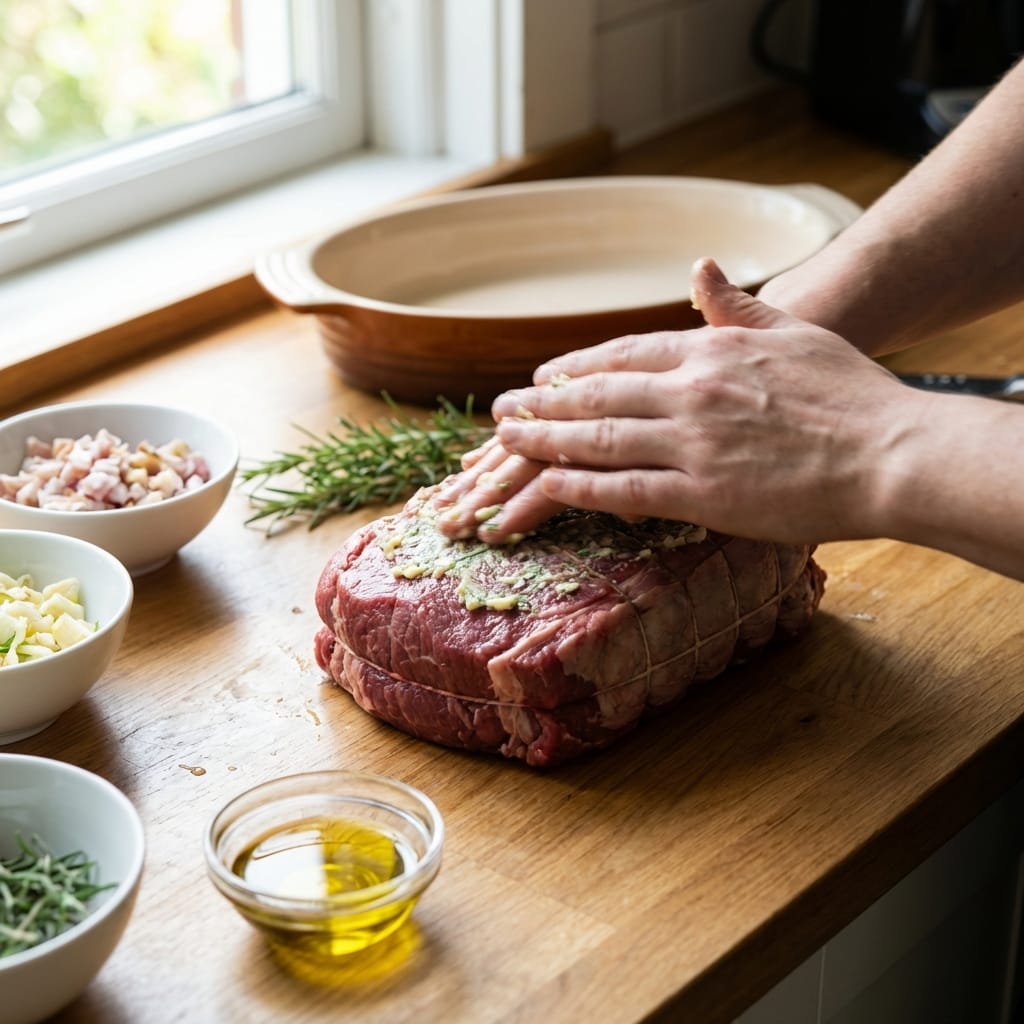
To achieve an easy roast beef, oven roast beef, classic roast beef dinner, homemade roast beef, follow these steps carefully. This roast beef recipe method ensures a crisp exterior and a pink, juicy interior.
- Prepare the Roast: Remove the beef from the refrigerator 1-2 hours before cooking to bring it to room temperature for even cooking. Pat dry thoroughly with paper towels.
- Season Generously: Rub the entire roast with olive oil. In a small bowl, mix salt, pepper, and minced garlic (and herbs if using). Press the mixture onto all sides of the meat, ensuring full coverage.
- Preheat and Sear: Preheat oven to 400°F (200°C). Place the roast on a rack in a roasting pan. Insert a meat thermometer into the thickest part, avoiding fat or bone. Roast at 400°F for 20 minutes to develop a flavorful crust.
- Reduce Heat and Cook: Lower oven temperature to 350°F (175°C). Continue roasting until the thermometer registers your target temperature (refer to Timing section). Avoid opening the oven door frequently to maintain heat.
- Rest the Meat: Once done, remove the roast from the oven. Tent loosely with foil and let rest for at least 15-20 minutes. This step is non-negotiable for juiciness in this roast beef recipe.
- Carve and Serve: Transfer the roast to a cutting board. Slice against the grain into thin or medium slices, depending on preference. Arrange on a platter and drizzle with any accumulated juices.
Pro Tips & Variations
Elevate your roast beef recipe with these expert tips: For enhanced flavor, create a dry rub with salt, pepper, garlic powder, and paprika ahead of time and apply it overnight. Always use a meat thermometer—guessing doneness leads to overcooking. If your roast is large, consider tying it with kitchen twine for uniform shape. For variations, swap rosemary for thyme or add a teaspoon of mustard to the rub. You can also add root vegetables like carrots and potatoes to the roasting pan for a one-pan meal, but avoid crowding the pan to ensure proper airflow. Another idea: baste the roast with its own juices or a mixture of butter and herbs during the last 10 minutes of cooking for extra richness.
Serving Suggestions
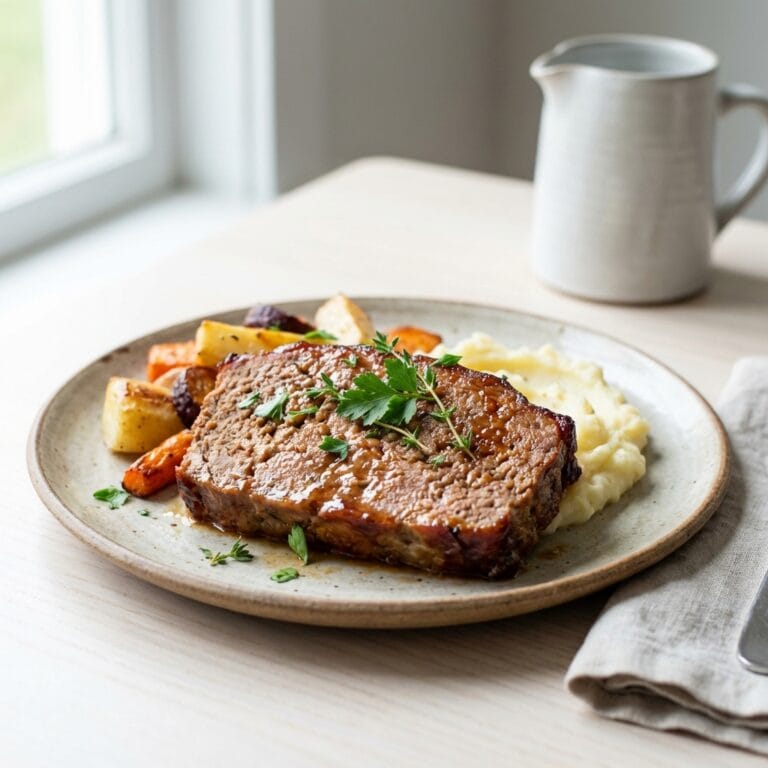
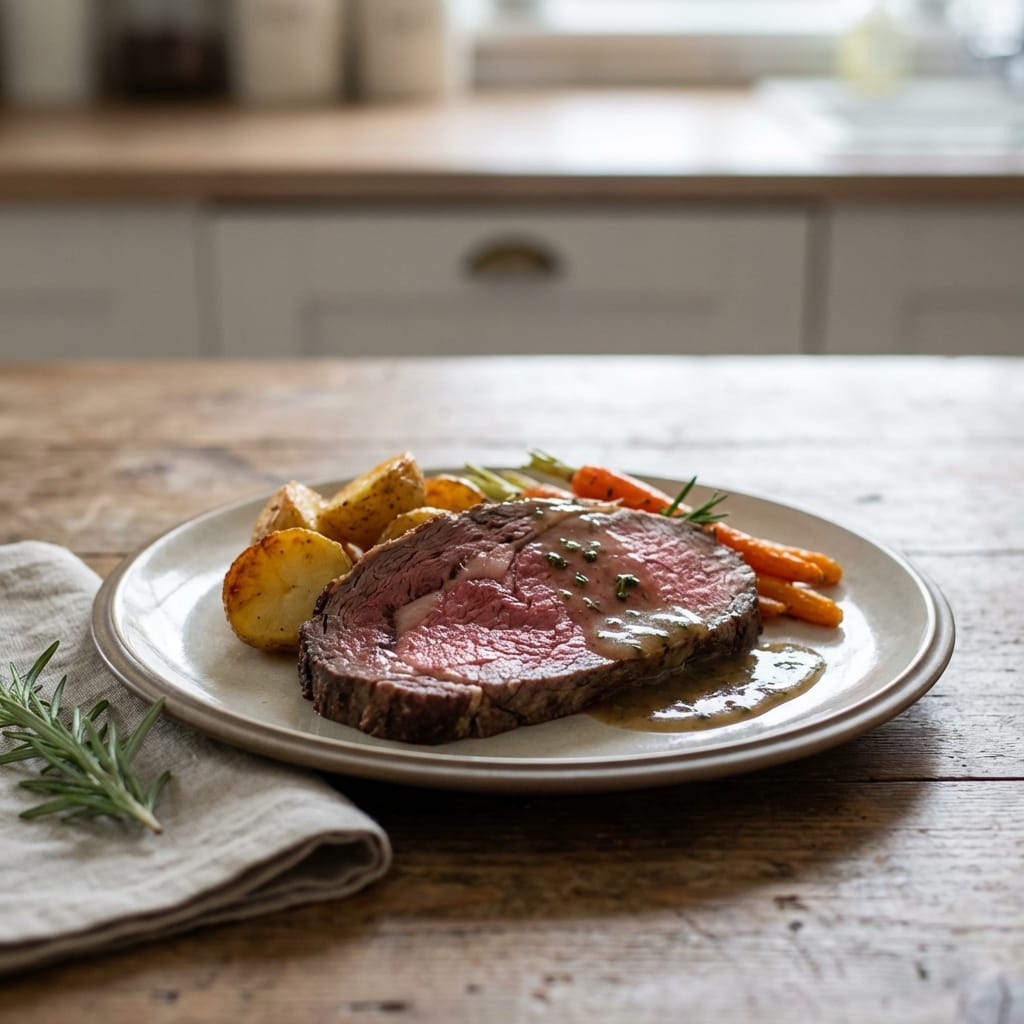
This classic roast beef dinner pairs wonderfully with traditional sides. Serve with creamy horseradish sauce, rich gravy made from pan drippings, and mustard. Classic accompaniments include Yorkshire puddings, roasted garlic mashed potatoes, honey-glazed carrots, and green beans almondine. For a lighter option, consider a fresh arugula salad with shaved Parmesan. When carving, use a sharp knife and cut against the grain for maximum tenderness. Leftover roast beef recipe makes excellent sandwiches with caramelized onions or can be diced into salads and soups. Always serve immediately after carving for the best texture and flavor.
FAQs
What is the best cut of beef for roast beef?
Opt for well-marbled cuts like ribeye, sirloin, or tenderloin for tenderness and flavor. These cuts respond well to dry-heat cooking and yield juicy results.
How do I ensure my roast beef is juicy and not dry?
Key steps are: bring meat to room temperature before cooking, use a meat thermometer to avoid overcooking, and let it rest for 15-20 minutes post-roasting. Resting allows juices to redistribute throughout the meat.
Can I cook roast beef in a slow cooker instead?
Yes, but texture will differ—it will be more shredded than sliced. For oven roast beef, follow this recipe for traditional results. If using a slow cooker, sear the roast first for flavor, then cook on low for 6-8 hours.
How should I store and reheat leftovers?
Store leftover roast beef in an airtight container in the refrigerator for up to 4 days. Reheat gently in a low oven (250°F) or microwave covered with a damp paper towel to prevent drying. Freeze for up to 3 months; thaw in fridge before reheating.
Conclusion
Mastering this roast beef recipe unlocks a world of culinary satisfaction, providing a reliable method for a juicy, tender, and impressive dish that suits any occasion. With its blend of simple ingredients and precise techniques, you’ll create a classic roast beef dinner that never fails to delight. Remember the key principles: proper seasoning, accurate timing, and adequate resting. This approach ensures your roast beef recipe becomes a cherished staple in your home cooking repertoire. It’s the perfect easy roast beef, oven roast beef, classic roast beef dinner, homemade roast beef for gatherings, offering rich flavors and minimal stress. We encourage you to try it, adapt it to your taste, and enjoy the memorable meals it brings to your table.